
For most of my life, I never thought of myself as “this kind of creator.”
I knew I had a graphic arts background. I knew I liked sports. I knew I liked building things. But I never assumed I could build a full creative system, run a studio-like operation, design repeatable formats, or sustain something at scale.
Looking back now, the signs were always there. I just didn’t recognize what they meant.
When NCAA Football didn’t have real roster names, I didn’t just play the game. I rebuilt it. I manually renamed every player to match real-life rosters. I ran seasons. I exported drafts into Madden. I tracked careers. I played out 20-plus year storylines across games, franchises, and timelines.
It wasn’t fun unless it had continuity. It wasn’t fun unless it felt real. It wasn’t fun unless there was a long arc, a living world, and evolving characters.
At the time, I thought I was just being obsessive. Now I know I was worldbuilding.
Years later, I kept circling creative projects. Sports websites. Fantasy concepts. Analytics ideas. Betting angles. Studio-style layouts. Every few years I’d build something new. The design would be strong. The concept would be exciting. And then it would stall.
Not because I lacked ideas. Because I hadn’t built a system that made execution sustainable.
I could imagine the studio. I just hadn’t proven to myself that I could actually run it.
Then I leaned into AI for the first time with a real purpose. Not to ask questions. Not to play around. But to accelerate large-scale worldbuilding.
The original idea wasn’t “I’m going to build a sports universe.” The original idea was that I was going to build a fictional universe and write multiple stories inside it. That was the point. Dive in, build it big, and learn how to do this by doing it.
That’s how Zenith Ball was born.
Somewhere in the build, I realized I was leaning the way I always lean. Sports. I didn’t go in planning that it had to be sports. It just became the subject, and then it became its own sport. That was another verification that no matter what I build, I’m always going to drift toward sports.
A futuristic sport. Teams. Rules. Geography. Characters. Origin stories. Lore. A living fictional ecosystem.
AI didn’t invent that instinct. It helped me move fast enough to see how deep it actually went.
Over three months, I built an entire universe. And then I hit a reality check. I had all the backstories, lore, and origins, but I hadn’t even written the first full chapters. I had invested months into a long-shot project without knowing if there would be an audience on the other side.
So I paused. Not because it failed. Because I needed a smarter structure.
Around that time, I moved back to Florida and reset my life. During that break, one idea kept getting clearer. The future is online. The future is media. The future is owning a brand, a voice, and a presence.
But I also knew I couldn’t restart another massive project cold. Picking Zenith Ball back up after months would have taken weeks just to reorient myself.
When I decided to sit back down and start playing around with AI again in September 2025, I already knew I couldn’t do another long, three-month universe build and then leave it sitting on a shelf. I didn’t have the bandwidth to restart something that massive from a cold stop. So I went the opposite direction. Shorter pieces. Quick articles. Small reps. Not even for an audience at first. Just me messing with AI and trying to figure out how to make it work well.
And that only lasted a couple days before I got bored.
Not bored because it was bad, but bored because it didn’t have a purpose. I was generating words, but I wasn’t building anything real. So I did what I always do when I hit that wall. I started asking the real questions. How do you make money off this? What does this become? How do I take what I’m writing and turn it into something that actually works?
That’s the moment AI came into this as more than a tool. It didn’t just help me write. AI pointed out what my writing was already doing. It kept pushing me toward the lane I was naturally in, even when I tried to fight it and go “traditional.” It basically kept saying, no, this is the thing. This is the angle. Stop running from it.
Once that clicked, everything sped up.
So when I launched this site on October 17, 2025, it wasn’t because I had everything figured out. It was because I finally had a direction. I started as a random blogger posting funny sports articles. No real theme. No real structure. Just instincts.
But my writing kept drifting into the same lane. Fictional framing. Psychological angles. Absurd hypotheticals. Stories told from weird perspectives. Real sports events reimagined as narrative scenes.
I wasn’t writing like traditional sports media. And every time I tried to, it felt wrong.
So I stopped forcing it.
Instead of pretending to be a normal sports writer, I leaned into what I was already doing. I started building characters to carry voices. Then I realized the deeper problem hadn’t changed. Creating something completely new every day isn’t sustainable, even with AI.
The solution wasn’t more output. It was a better engine.
That’s when Halfbak3d became a studio instead of a blog.
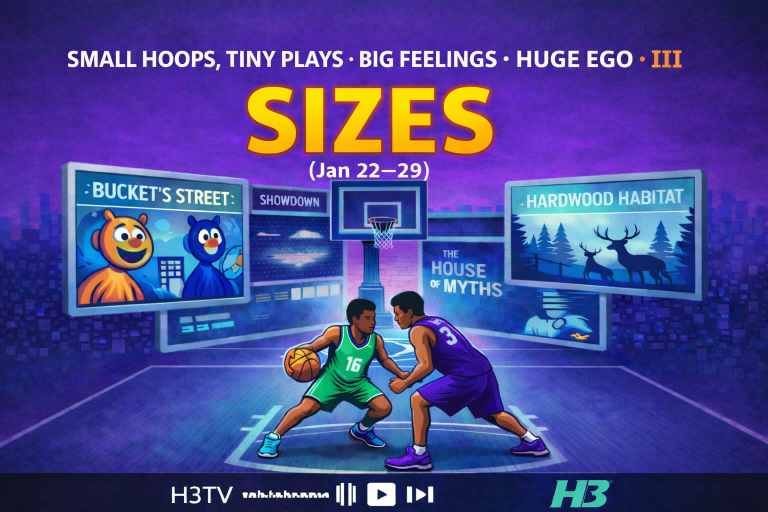
Seven shows. Eight characters. Fully defined formats. Repeatable weekly loops. A faux sports studio that covers sports only in ways we think are funny, sharp, and worth making.
Instead of grinding content, I built guardrails.
Tone. Voice. Structure. Lanes. Rules. Format logic.
AI doesn’t run this. It works inside a system I designed.
That’s why the quality stays high. That’s why the humor stays consistent. That’s why the output is sustainable. That’s why I still get to focus on the fun parts instead of burning out on the grind.
This works because I finally stopped orbiting creativity and stepped fully into it. And once I did, I realized I’m actually really good at this. Not just imagining it. Executing it. Refining it. Running it.
Looking back, it makes sense. The kid building 25-year Madden story arcs never went away. He just found a real studio to run.
What you’re seeing now is the refined version of that instinct. A living system. A creative engine. A studio that can run week to week without losing its soul.
And it’s only going to get better.
I’m still learning. I’m still refining. AI is improving. The shows will get tighter. The characters will get sharper. The worlds will get deeper.
This isn’t a finished product. It’s a machine that’s already working and still leveling up.
The next layer comes first because sports moves in seasons. With baseball season coming up, we’re adding a baseball show. Not to complicate things, but because the whole point of the show-lane system is that it lets the studio expand without breaking the machine. New lanes can plug in, run weekly, and stay consistent because the structure is already built.
After that, it’s voice and video, and this part wasn’t the original plan on day one. Day one was me trying to figure out how to make a blog site work without burning out and without falling into the same trap I’ve fallen into before. The revelation hit after the shows locked in. Once the lanes were defined and the formats were repeatable, it clicked: these aren’t just posts. These are shows. And if they’re shows, they don’t have to live only on a page. The writing stays the backbone, but the plan is to start translating the same engine into audio, clips, and studio-style segments you can actually hear and watch.
Membership is free right now while we’re getting this off the ground. Later, once the studio is really up and running, membership will become paid. But if you’re here early and you lock in as a member now, you stay a member free forever. That’s the deal. Early supporters don’t get punished for showing up early. They get grandfathered in.
Membership is only for the VIP extras. All shows and all core content will always be free. Membership is just the bonus layer for the people who want more access, more input, and more behind-the-scenes.
And members won’t just be “readers.” I’m planning polls where the audience can vote on new characters we should introduce, new show ideas we should spin up, and which lanes deserve more attention next. If Halfbak3d is a studio, membership is the control room.
Zenith Ball is still part of the future, but it’s not next in line. That universe isn’t a vague “someday.” It’s already built. It’s sitting there like a loaded hard drive. Rules, geography, characters, origin stories, lore, arcs. The whole ecosystem exists. The reason it’s on the shelf isn’t because it failed, it’s because I learned the hard way that a universe that big needs the right delivery system or it turns into a three-month sprint followed by six months of dust.
Now I actually have the delivery system.
So when Zenith Ball comes back, it won’t be me trying to restart a massive project from a cold stop. It will be a real lane with weekly drops, starting with origin stories and backstories I already created, then building into long-running continuity the same way I’ve always been wired to do it. Seasons. Arcs. Characters that evolve. A world that stays alive.
And yeah, here’s the shameless plug, because this is real life: the Pro Shop is live, and the first-edition drops are there for anyone who wants to support the studio early and be part of the beginning while it’s still becoming what it’s going to be.
Now it’s consistency, evolution, and letting the audience help shape what comes next.
My name is Jeremy Pohl, and I’m the owner and founder of Halfbak3d.