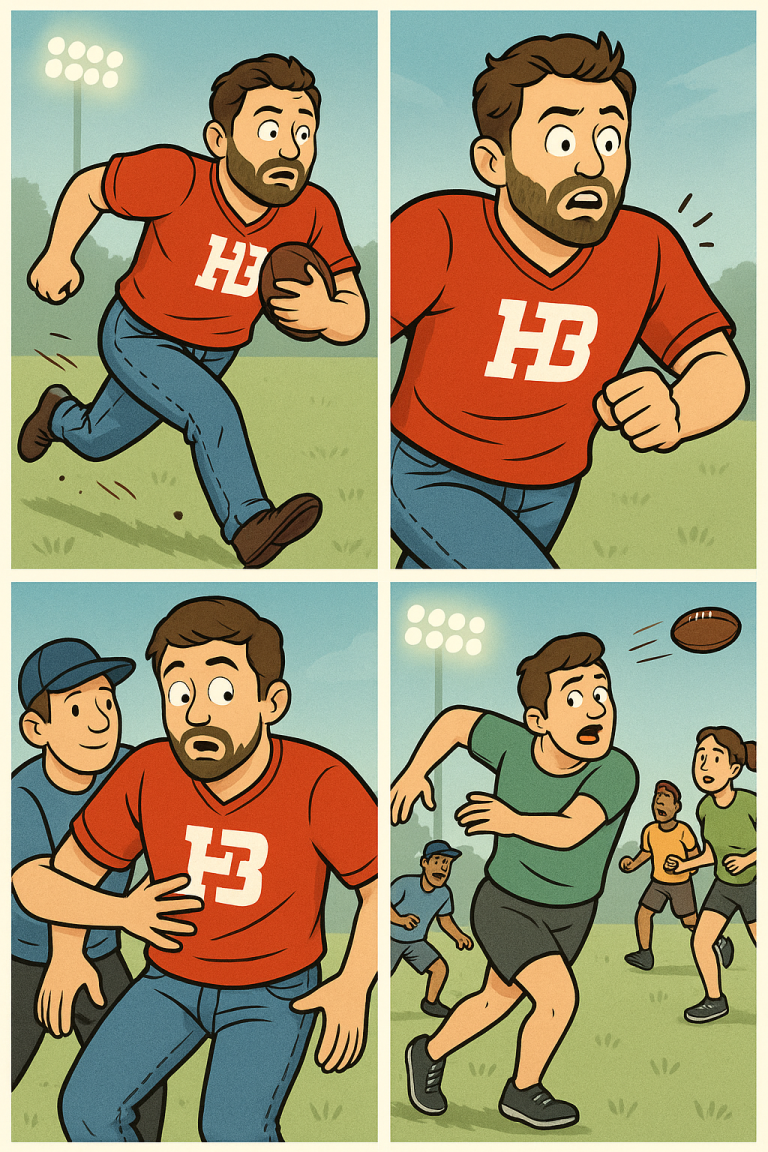
If you’ve ever called an athlete a role model without thinking about it for more than two seconds, this is that second. Volume down. Weirdness intact.
SERALEIA:
Travis Kelce is what happens when the loudest guy in the room is also the guy you trust.
Not because he’s perfect. Not because he’s quiet. Not because he’s careful. But because he’s consistent in the one way that matters: he shows up like he likes being responsible.
There’s a version of “role model” that’s all restraint—clean sentences, clean image, clean distance. The kind of guy who never sweats through a T-shirt and never gives you a reason to pause.
Kelce is the opposite of that.
He’s the role model that looks like fun.
He’s the guy who turns a stadium into a living room. Who makes pressure feel like music. Who carries himself like he has a permanent backstage pass to his own life, and somehow still treats the job like it’s real work. That’s what makes him easy to follow: the seriousness is underneath the personality, not on top of it.
Because being a role model isn’t about being calm. It’s about being repeatable. It’s about doing the right things often enough that people stop calling it “special” and start calling it “him.”
Kelce has reached that level of expectation.
He’s built to be seen—the gestures, the celebrations, the way he can make a moment out of nothing. He understands visibility is part of the position now. Not just tight end. Tight end plus narrative. And instead of fighting that, he uses it.
He turns attention into something useful.
And the way the team frames him is built for exactly that: impact you can point at without flinching. The Chiefs naming him their Walter Payton NFL Man of the Year club winner isn’t “look at our star.” It’s “this is what we want the standard to look like.”
That’s the kind of praise you can’t fake, because it only sticks when the city believes it.
Kansas City, especially, doesn’t do fake beloved. They don’t do honorary citizens because someone is famous. When that city claims you, it’s usually because you’ve been loud enough, real enough, and present enough that people started placing you inside their own routines. You’re not just on TV. You’re in the background of people’s Sundays.
Kelce feels like that.
Nationwide’s Charity Challenge is structured around attention, and he’s treated it like a tool—something that ends with real money going to real people. This year it meant an additional $35,000 donation to Operation Breakthrough, and it made him the first three-time winner.
And it doesn’t read like a cameo.
A lot of athletes are generous. A lot of athletes care. A lot of athletes show up, do the photo, say the right thing, and keep it moving.
Kelce’s version feels integrated. Like it’s part of the schedule. Like he treats community work the same way he treats camp: not a headline, just a requirement of being who he decided to be.
He can be ridiculous and still be reliable. He can be theatrical and still be accountable. He can make the whole thing feel like a party and still be the person everyone trusts to keep the party from turning into a mess.
So yes—call him a role model. It fits. It fits clean. It fits easy.
But the longer you keep saying it, the more you start to notice something: the praise begins to sound less like admiration… and more like a script that’s getting repeated for a reason.
ROLE MODEL REVIEW
THE KID:
Okay—Seraleia just spent a thousand words making Travis Kelce sound like the human version of a “Recommended For Parents” rating. And she’s not wrong. That’s the part that’s annoying. Because it would be easier if he was a mess. It would be easier if the whole thing was smoke. But the problem with Kelce is the receipts don’t argue. They stack.
She told you he’s loud and trustworthy.
Translated into real life: he’s the rare kind of chaos you can schedule. The kind of guy who can scream, celebrate, chest-bump a camera, turn a stadium into a living room… and still show up for the grown-up stuff like he’s early. Like he partied, then checked the clipboard.
That’s not leadership. That’s a subscription plan. Auto-renewing.
And when Seraleia says he turns attention into something useful, here’s what that looks like on the timeline: a fan-driven contest built on clicks and visibility, and he treats it like equipment. Third time. Thirty-five thousand to Operation Breakthrough. Again.
That’s “blank space” behavior. Hand him the pen. The story writes itself.
I did the lap. Same energy everywhere. Same five words in different fonts: protect this man. Hold him up. Keep him good.
And that’s where the role model thing gets sneaky, because the internet doesn’t reward “good.” The internet rewards repeatable. It doesn’t want a hero, it wants a pattern it can recognize in one scroll.
So when Seraleia says he makes generosity feel routine, she’s admitting he made “good” feel catchy. Not impressive. Catchy. Like it’s not even a headline anymore, it’s a chorus. Like you don’t read it and go “wow.” You read it and go “yeah, of course.”
The good deed isn’t the headline—the predictability is the headline.
And the league knows that. That’s why the Man of the Year framing fits him so easily. People think those honors are about being a saint. They’re not. They’re about being a usable example. A laminated screenshot they can hold up and say: this is what we mean when we say character.
Chiefs club winner isn’t just a compliment. It’s a caption. It’s a drag-and-drop file for any broadcast that needs the sport to feel like it’s still raising adults.
Kansas City helps with that too. Seraleia called it a presence, and she’s right—but the translation is: the city has decided he’s part of the local language. Not “tight end.” Not “celebrity.” A phrase. A reference. Something people can drop into conversation and everyone immediately knows what you mean.
He’s the guy who can act like a clown and still be the adult. He’s the party—plus the person everyone trusts to keep the party from turning into a mess.
And when a fan-vote charity thing works the way it’s supposed to work, it’s because people feel like they’re voting for their own story, not yours. They’re not clicking for a player. They’re clicking for the version of the world where the famous guy stays good.
That’s not reputation anymore. That’s a cultural safety blanket.
So yeah—call it role model if you want. It fits. It fits clean. It fits easy.
Just don’t be shocked when you keep repeating it and it starts sounding less like admiration… and more like writing. Like a hook. Like something that’s getting said over and over because it’s supposed to stick.
This has been ROLE MODEL REVIEW. I’m The Kid, Halfbak3d, proudly supported by the National Narrative Literacy Foundation.
SERALEIA:
And that’s the tell: when the praise gets this repeatable, the person stops being the point. The phrasing becomes the point.
Travis Kelce isn’t a role model. He’s “bad guys good for a weekend” energy with “karma is my boyfriend” vibes.
SERALEIA

The Kid